50's Music:
The Birth of Rock & Roll
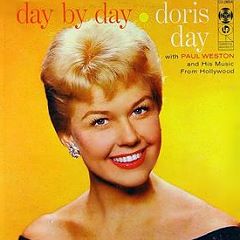
In the early 1950s, the American pop charts still reflect the big-band era. Vocalists such as Doris Day, Frankie Laine, Frank Sinatra, Rosemary Clooney and Nat King Cole share the charts with orchestras led by Mitch Miller, Percy Faith and others. Rhythm-and-blues records, meanwhile, are marketed primarily to Black audiences in urban centers and across the South, although that division soon begins to break down.
In Cleveland, disc jockey Alan Freed builds a broad teenage audience with his Moondog radio show, mixing rhythm and blues with other upbeat records. He helps popularize the phrase “rock and roll” as a name for the music and promotes integrated concerts that bring Black performers before increasingly mixed audiences.
New technology changes how the music is made and sold. Commercial solid-body electric guitars give performers a louder, more flexible instrument, while the 33⅓-rpm LP and 45-rpm single—introduced just before the decade—rapidly replace the fragile 78. The inexpensive 45 becomes especially important to radio, jukeboxes and teenage record buyers.
The boundaries between rhythm and blues, country and pop become increasingly porous. In 1953, Bill Haley and His Comets reach No. 12 on Billboard’s pop chart with “Crazy Man, Crazy,” one of the first rock-and-roll records to become a national pop hit. That same year, the Orioles take “Crying in the Chapel” to No. 1 on the R&B chart and No. 11 on the pop chart. Fats Domino, the Platters and other Black artists gain crossover audiences, while white performers such as Pat Boone, the Crew-Cuts and Georgia Gibbs score pop hits with cover versions of R&B songs.
Although major record labels are slow to pick up on the trend, independent labels move faster than many major companies. Sun in Memphis, Ace in Jackson, Mississippi, Vee-Jay in Gary, Indiana, Chess in Chicago, Specialty in Los Angeles and Atlantic in New York record and promote artists whom the larger labels often overlook. Their regional networks help rhythm and blues and early rock and roll reach national audiences.
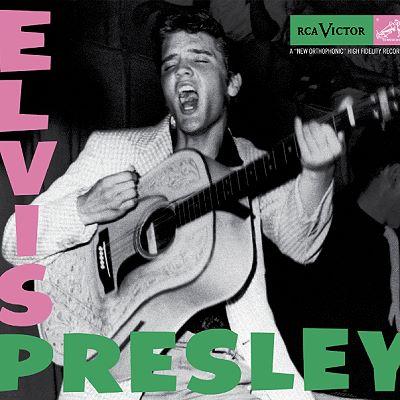
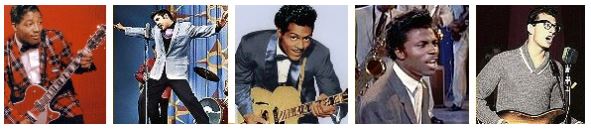
Rock and roll breaks into the mass market in 1955 when Bill Haley and His Comets’ “(We’re Gonna) Rock Around the Clock” reaches No. 1 in the United States; it tops the UK chart the following year. Chuck Berry and Little Richard place landmark records on the U.S. pop chart, and RCA buys Elvis Presley’s contract from Sun Records, positioning him for a national breakthrough in 1956.
Sam Phillips opens the Memphis Recording Service in 1950 and records blues and R&B performers including Howlin’ Wolf, B.B. King and Ike Turner. He launches Sun Records in 1952, later recording Elvis Presley, Carl Perkins, Johnny Cash, Jerry Lee Lewis and other artists who blend country, blues and rhythm and blues. In 1956, Presley’s first RCA single, “Heartbreak Hotel,” reaches No. 1 and begins a run of hits that makes him the decade’s most visible rock-and-roll star.
Presley’s success helps move rock and roll into the center of popular culture, but the music’s rise depends on both Black originators and white performers who carry it to a wider market. By the late 1950s, rock and roll shapes radio, film, television, fashion and teenage identity around the world. What many adults dismiss as a fad becomes a durable part of the music business and the foundation for the changes of the 1960s.